Planning a home renovation? Learn what demolition and hacking works involve, HDB and condo rules, what needs approval, and how to prepare for a smooth renovation project in Singapore.
What Is Demolition and Hacking in a Singapore Renovation?
Demolition and hacking works are the first stage of most home renovations in Singapore. Before new tiles, cabinets and fixtures can be installed, the old ones must be removed. This process — commonly referred to as "hacking" in the local renovation industry — involves dismantling old carpentry, removing floor and wall tiles, and stripping out fixtures down to the bare substrate.
For homeowners planning a renovation, understanding what demolition and hacking involves helps you budget accurately, avoid common pitfalls, and coordinate the different trades — from the demolition contractor to the cleaning team — so your renovation stays on schedule. If you are looking for a reliable demolition contractor, Demolition Contractor Singapore specialises in hacking and demolition works for HDB flats, condos and landed homes.
What Typically Gets Hacked During a Renovation?
The scope of hacking works depends on how extensively you are renovating. A full renovation typically involves hacking most of the existing finishes and built-in fixtures, while a partial renovation may only target specific areas such as the kitchen or a single bathroom. Common items removed during demolition and hacking include:
- Old kitchen cabinets, countertops and sinks
- Built-in wardrobes and carpentry fixtures
- Floor and wall tiles (floor hacking and wall hacking)
- Toilets, basins, shower screens and bathroom fixtures
- Partition walls and non-structural dividers
- Doors, door frames and architraves
- Old wiring conduits, plumbing pipes and aircon trunking
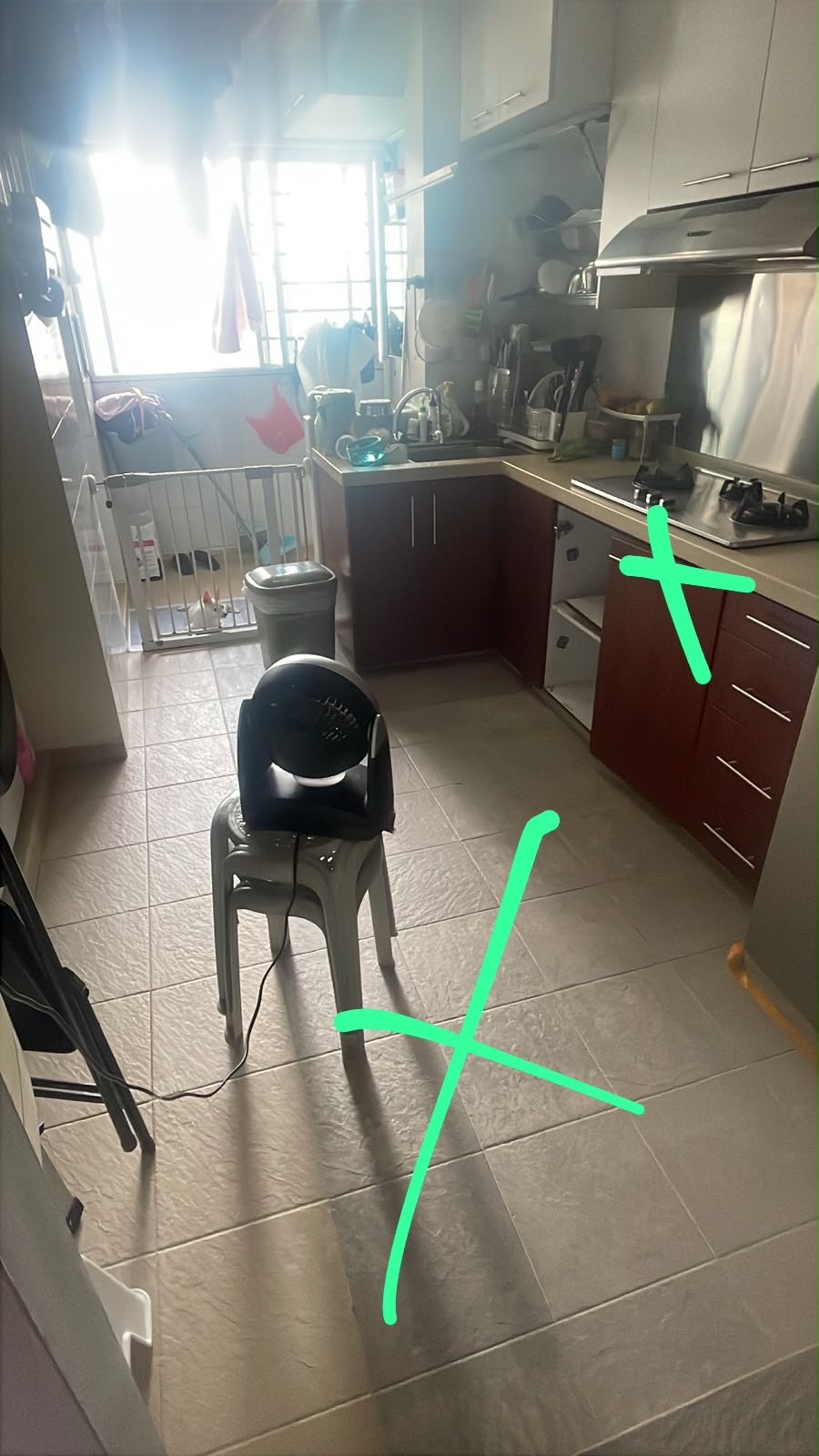
The photo above shows a typical kitchen before hacking — the green X marks indicate the old base cabinets and floor tiles that are scheduled for removal. Once these are hacked out, the space is ready for new carpentry, tiling and installation work.
HDB and Condo Hacking Rules: What Needs Approval
Not all hacking works can be carried out freely. Both HDB and condominium managements have strict rules about what can and cannot be removed, because certain walls and structures are load-bearing or affect the building integrity, waterproofing or facade. The following works require prior approval before any hacking begins:
- Removing or altering any structural wall, column or beam
- Hacking of floor finishes in HDB toilets and kitchens (waterproofing areas)
- Relocating or adding of sanitary fittings in bathrooms
- Changing the position of the main door or windows
- Any work that affects the building structure or facade
For HDB flats, a renovation permit must be obtained from the HDB Branch Office before any hacking works commence. Condominium renovations require approval from the Management Corporation Strata Title (MCST), and many condos restrict hacking hours to weekdays between 9am and 5pm. Always confirm the approval status with your renovation contractor before scheduling the demolition.
The Demolition and Hacking Process, Step by Step
A professional demolition contractor follows a systematic process to ensure the hacking is done safely, efficiently and with minimal disruption to neighbours. Here is what to expect during a typical hacking project:
Site assessment and planning
A professional demolition contractor inspects the property, identifies load-bearing walls, checks for concealed wiring and plumbing, and confirms which fixtures are to be removed. This assessment prevents costly mistakes such as hacking a structural wall or damaging concealed pipes.
Protection and preparation
Before any hacking begins, the contractor protects areas that are not being renovated. This includes covering floors, masking windows, sealing off rooms with dust sheets, and notifying neighbours — especially in HDB flats where noise and dust affect adjacent units.
Hacking and dismantling
The actual hacking works are carried out using power tools, hammers and chisels. Floor tiles are hacked off the screed, wall tiles are removed down to the brick or concrete substrate, and built-in carpentry is dismantled section by section. This is the most labour-intensive and noisy stage.
Debris removal and disposal
All demolition debris — broken tiles, timber, metal, cement chunks — is bagged and transported to an approved disposal facility. In Singapore, renovation debris must be disposed of properly; dumping it in HDB bins or common areas is not allowed.
Post-hacking cleaning
After the hacking is complete, the unit is left covered in fine cement and tile dust. A thorough post-hacking clean is essential before any new installation work begins. This is where a professional post-renovation cleaning service removes the dust from every surface, vent and corner.
Why Post-Hacking Cleaning Matters Before Renovation Continues
One of the most overlooked stages of a renovation is the clean-up after hacking. Demolition generates a large volume of fine cement dust, tile fragments and timber debris that settles on every surface — walls, ceilings, inside electrical sockets and throughout the air conditioning vents. If this dust is not properly removed, it interferes with the next stages of renovation: new tiles will not adhere properly to dusty screed, paint will not bond to dusty walls, and new carpentry will sit on a layer of grit.
A professional post-renovation cleaning service removes this construction dust thoroughly using HEPA-filtered vacuums and systematic top-to-bottom cleaning. For a detailed breakdown of what this involves, read our post-renovation cleaning guide, or view our full range of Singapore cleaning services to see how we support homeowners and contractors through every stage of a renovation.
Common Demolition Mistakes to Avoid
Hacking works may look straightforward, but they are one of the most common sources of renovation problems. Avoid these frequent mistakes:
- Hacking without checking HDB or condo management approval — this can result in fines and a stop-work order.
- Removing a wall that turns out to be structural, which compromises the building and requires costly reinstatement.
- Not protecting concealed pipes and wiring, leading to leaks or electrical faults discovered only after the new finishes are installed.
- Underestimating the dust — hacking generates fine cement and tile dust that spreads through the entire unit and into neighbouring flats if not contained.
- Skipping the post-hacking clean, which leaves dust that interferes with new tiling, painting and carpentry work.
Budgeting for Demolition, Hacking and Cleaning
The cost of demolition and hacking depends on the size of the unit, the scope of works and the type of materials being removed. Floor and wall tile hacking is typically charged per square foot, while carpentry dismantling is charged per item or per unit. Debris disposal and transport are usually billed separately. As a rough guide, hacking works for a full HDB or condo renovation can range from a few thousand dollars for a single room to significantly more for an entire unit.
When budgeting, do not forget to include the post-hacking and post-renovation cleaning. Many homeowners focus on the renovation costs and overlook the cleaning, only to find that construction dust remains long after the contractors leave. For transparent pricing on professional cleaning after your renovation, see our cleaning service prices in Singapore.
Conclusion
Demolition and hacking are the foundation of any renovation project. Getting this stage right — with proper approvals, a reliable demolition contractor and a thorough post-hacking clean — sets up the rest of your renovation for success. For the hacking works themselves, engage a specialist demolition contractor; for the cleaning that follows, SG Express Cleaning removes construction dust and debris so your new finishes go in on a clean, properly prepared surface. For professional hacking and demolition works, visit Demolition Contractor Singapore — and for the post-renovation clean that follows, get in touch with us on WhatsApp.
Renovating soon? Book your post-hacking clean.
Send us a few photos of your unit on WhatsApp and we will provide a transparent quotation for post-renovation cleaning — usually within minutes. We coordinate with your renovation schedule so the clean happens at the right time.
View our Singapore cleaning services