Ceiling fans, toilet bowl hinges, door tops and window tracks: the nine spots Singapore homes forget to clean, and how to clean each one properly.
Which cleaning spots do most Singapore homes miss?
Most Singapore homes miss the same nine spots: ceiling fan blades and motor housing, the toilet bowl under the rim and around its hinges, the top of door frames and cornices, skirting boards and wall corners, light fixtures and lampshades, window tracks and grilles, the gap behind and under large appliances, kitchen extractor hood filters and cabinet tops, and the bathroom exhaust fan with the shower screen tracks. These areas are either above eye level, physically awkward to reach, or hidden behind furniture, so routine wiping passes them by.
The two that make the biggest difference to how a home feels are the ceiling fan and the toilet bowl. Both are covered in detail below, with the correct step-by-step method and the mistakes to avoid.
1. Ceiling Fan Blades and the Top of the Motor Housing
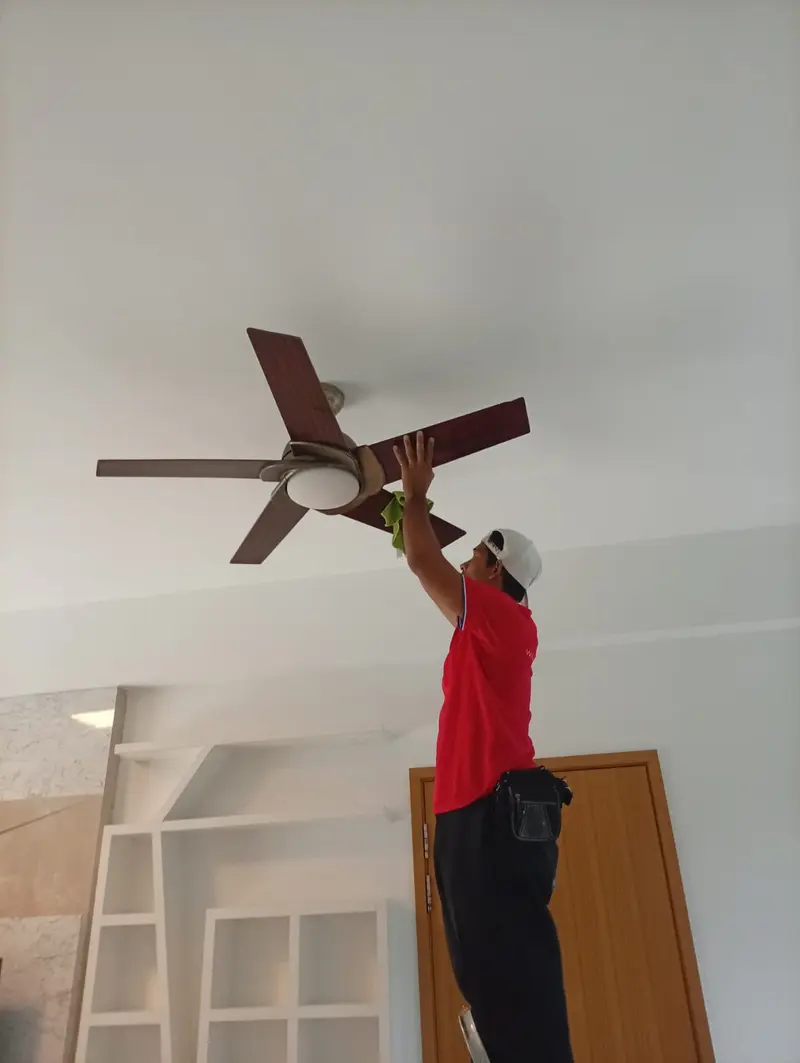
A ceiling fan in Singapore runs most days, and every rotation pushes dust from the top of the blades into the air you breathe and onto the surfaces you just cleaned. Because the dust sits above eye level, it is easy to forget until the blades start leaving grey marks on the wall or a visible film appears on the furniture below.
How to clean a ceiling fan properly
- Switch the fan off at the wall switch and the remote, then wait for the blades to stop completely before you touch anything.
- Stand on a stable step ladder placed on a level floor. Never stand on a chair, a stool or the edge of a bathtub.
- Run a vacuum brush attachment or a slightly damp microfibre cloth along the top of each blade first. This is where the thickest layer of dust sits, and lifting it off gently stops it from raining down onto your bed or floor.
- Wipe each blade from the centre hub outwards on both the top and underside, using one direction. A damp cloth collects dust; a dry one just pushes it back into the air.
- Wipe the motor housing, the pull chain and the light cover with a cloth that is barely damp. Never spray liquid directly at the motor, wiring or ceiling mount.
- Dry every blade with a clean cloth. Damp blades attract a fresh layer of dust within days, and water left on wood or veneer can warp the surface.
If the fan sits above a bed, lay a sheet over the mattress before you start, and do the fan before vacuuming and mopping so any dust that falls is picked up in the same session. Wood and veneer blades should never be soaked — a barely damp cloth and a quick dry is enough.
2. The Toilet Bowl: Under the Rim, Hinges and the Base
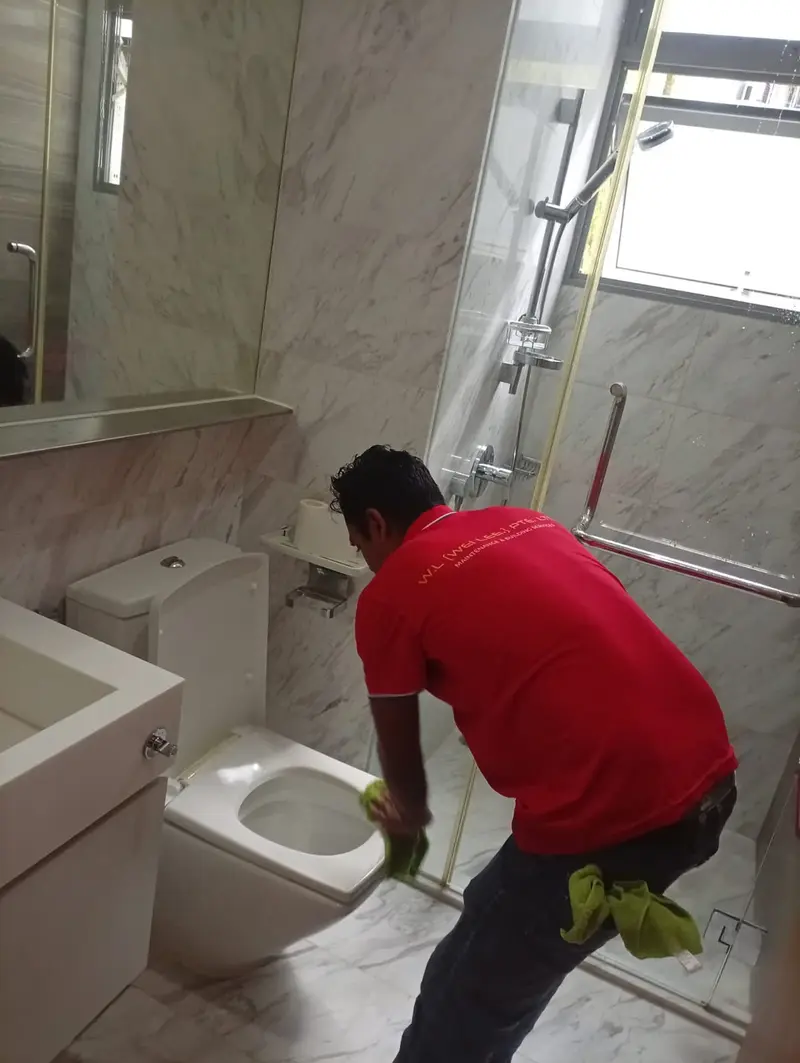
A quick swish around the bowl leaves the parts that actually cause problems untouched. The underside of the rim, the waterline, the hinges and the seam where the bowl meets the floor collect bacteria and mineral deposits that a surface wipe never reaches.
How to clean a toilet bowl properly
- Flush the bowl first, then apply toilet cleaner under the rim and around the waterline. Leave it for five to ten minutes so the cleaner can break down the film rather than you scrubbing it cold.
- Scrub under the rim and down the sides of the bowl with a toilet brush, then give the waterline a firm pass. This line is where mineral deposits and bacteria collect even when the bowl looks clean.
- Clean the outside of the bowl, the lid, the seat, the hinges and the base with a disinfectant on a separate cloth. Hinges and the seam where the bowl meets the floor are the two spots most often skipped, and they are the ones that stain and smell first.
- Use a dedicated cloth or paper towel for the toilet and never reuse it on the sink, taps or vanity.
- Flush once more and rinse the brush in clean water before storing it.
Safety first: never mix bleach with an acidic descaler or toilet cleaner. The combination can release chlorine gas in a small, poorly ventilated bathroom. Use one product at a time, rinse between products, and keep the window or door open while cleaning.
Rather have every spot covered in one visit?
Send us photos of your home on WhatsApp and we will quote a full deep clean, including fans, door tops, window tracks and bathrooms.
Get My Free WhatsApp Quote7 More Spots Most Homes Forget
Top of door frames, door tops and cornices
Dust rises and settles on the highest edges in a room, which is why the top edge of a door frame or door is almost always coated while the rest of it looks clean. Run a damp microfibre cloth along the top of every door and frame, and along cornices and ceiling edges, once a month. A vacuum with a brush attachment handles cornices faster on high ceilings.
Skirting boards and wall corners
Skirting boards collect dust that settles downward and hair that drifts along the floor. Wipe them with a damp cloth after vacuuming, not before, or you will simply push dust back onto the floor. Pay attention to the corners where two walls meet, and behind furniture that never moves.
Light fixtures and the top of lampshades
Light shades and the top of a pendant or downlight housing gather a visible layer of dust, and warm bulbs make dust bake onto the surface. Switch the light off and let the bulb cool before wiping. For fabric shades, use a vacuum brush attachment on the lowest setting rather than a wet cloth.
Window tracks, grilles and sills
Window tracks are open to the outdoors, so they collect dust, grit and dead insects. Vacuum the track with a narrow nozzle first, then wipe with a damp cloth wrapped around a flat tool to reach the corners. Grilles and the sill ledge need the same treatment — this is one of the first areas a tenant, landlord or property agent inspects.
Behind and under the fridge, washing machine and sofa
These gaps never get swept because nothing tells you there is dust there. Pull the appliance out once every three months, vacuum the floor and the back vents, and wipe the wall behind it. Dust behind a fridge or washing machine also reduces how efficiently the appliance runs.
Kitchen extractor hood filter and cabinet tops
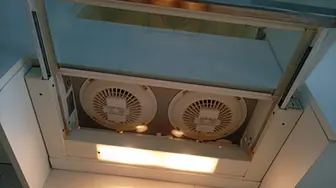
The filter inside a kitchen hood traps cooking grease and, over months, becomes sticky and less effective. Soak it in hot water with a degreaser, scrub gently and rinse, following the manufacturer’s instructions. The flat top of kitchen cabinets collects a greasy dust film that ordinary wiping spreads around, so clean it with a degreaser rather than plain water.
Bathroom exhaust fan and shower screen tracks
The exhaust fan cover collects lint and dust, which slows extraction and allows mould to grow in a humid bathroom. Remove the cover, wash it in soapy water, dry it fully and refit it. Shower screen tracks hold soap scum and water, so wipe them dry after cleaning to stop mould returning.
How Often Should You Clean the Spots You Forget?
A simple schedule keeps forgotten areas from turning into a deep-cleaning job. High surfaces need the most frequent attention because they collect the most settled dust.
| Spot | How often | Why |
|---|---|---|
| Ceiling fan blades and motor housing | Every 2 to 4 weeks | Dust builds fast in Singapore humidity and gets circulated each time the fan runs |
| Toilet bowl — brush and waterline | 2 to 3 times a week | Stops mineral staining and odour before it sets |
| Toilet hinges, base and outside surfaces | Weekly | The spots that stain and smell first |
| Door tops, cornices, light fixtures | Monthly | Highest surfaces collect the most settled dust |
| Skirting boards and window tracks | Monthly | Grit in tracks scratches glass and frames |
| Behind appliances, cabinet tops, exhaust fan | Every 3 months | Grease and lint build-up that affects how appliances run |
DIY Cleaning or a Professional Deep Clean?
Wiping a ceiling fan or a door top is a ten-minute job with a step ladder and a microfibre cloth. Where DIY tends to fall short is the build-up that has been sitting for months: greasy cabinet tops, the filter inside a kitchen hood, dust behind a washing machine, and grout lines that need descaling. That work is what a deep clean rather than regular house cleaning is for, and it is usually worth booking when you are moving into a new home or preparing a property for handover, because every room is covered in a single visit.
SG Express Cleaning covers fans, light fixtures, door frames, skirting boards, window tracks, bathrooms and kitchen areas as part of our home and deep cleaning services in Singapore for HDB flats, condominiums and landed homes. You can view our cleaning prices or browse recent cleaning projects to see the standard we work to.
Frequently Asked Questions
How often should I clean my ceiling fan in Singapore?
Clean the blades and the top of the motor housing every two to four weeks. Singapore’s humidity keeps dust slightly tacky, so it clings to blades instead of falling away, and a running fan then circulates that dust around the room. Homes near a main road, a construction site or with work-from-home traffic should be cleaned closer to the two-week mark.
What is the best way to clean a ceiling fan without dust falling everywhere?
Lift the dust off rather than wiping it off. Use a vacuum brush attachment or a slightly damp microfibre cloth along the top of each blade, working from the hub outwards, and hold a cloth underneath as you go. Doing this before you vacuum the floor means any dust that does fall is removed in the same session.
Can I mix bleach with toilet bowl cleaner?
No. Mixing bleach with an acidic descaler or toilet cleaner can release chlorine gas, which is dangerous in a small bathroom. Use one product at a time, flush and rinse thoroughly between products, and leave the bathroom door or window open while you clean. Never store mixed products in the same bottle.
How do I remove stubborn stains in the toilet bowl?
Give the cleaner time to work. Apply a descaler under the rim and around the waterline, leave it for five to ten minutes, then scrub firmly with a toilet brush. For hard water rings, repeat the process rather than scrubbing harder, which can scratch the glaze and give stains somewhere to settle again.
How often should hard-to-reach spots be deep cleaned?
High surfaces such as door tops, cornices and light fixtures need a monthly wipe. Areas behind and under large appliances, kitchen cabinet tops and the bathroom exhaust fan should be deep cleaned every three months. A full deep clean of every forgotten spot once or twice a year keeps the home in good condition between routine cleans.
Should I clean these spots myself or hire professional cleaners?
Routine wiping of high and forgotten surfaces is manageable yourself with a step ladder and a microfibre cloth. A professional deep clean makes more sense when dust and grease have built up over months, when ceilings are high, or when you are moving in, moving out or handing over a property and need every area covered in one visit. Message us on WhatsApp for an all-inclusive quotation.
Ready for a cleaner home?
Send us a few photos of your home on WhatsApp and we will reply with a transparent quotation — usually within minutes.
Get My Free WhatsApp Quote View our Singapore cleaning services