A greasy kitchen hood loses suction, drips onto your hob and yellows with age. Here is how to degrease the filter, fan blades and casing properly, how often to do it, and when to call a professional.
How do you clean a kitchen hood properly?
Switch the hood off at the isolator, take out the mesh filter and oil cup, and soak them in hot water with a degreaser for 20 to 30 minutes. While they soak, wipe the fan plates and the inside of the housing with a damp, degreaser-soaked cloth, then wipe the underside, light panel and sliding glass panel. Rinse the filter until the water runs clear, dry everything completely and refit it. Wash the filter monthly and deep clean the fan plates every two to three months, or every two to three weeks if you wok-cook on high heat.
Most people wipe the outside of the hood and stop there. The grease that actually matters sits inside, on the mesh and on the two fan plates you can only see if you look up with a torch. That is where suction is lost, where the smell comes from, and where the fire risk builds up.
Why a greasy hood matters more than it looks
Kitchen grease does not stay where it lands. It travels with steam, cools on the nearest surface and sets into a sticky film that traps dust. Over months, that film does four things to a Singapore kitchen:
- It kills suction. A clogged mesh blocks airflow, so the fan has to work harder to move less air. Smoke and oil mist end up on your cabinets and in the next room instead of going up the duct.
- It becomes a fire risk. Grease on the fan plates and inside the duct is fuel. A flame that licks up from a wok, or a motor running hot under the extra load, can ignite residue that has been building for years.
- It changes how the kitchen looks. The plastic housing and the fan plates yellow, the glass panel hazes over, and the cabinet tops directly above the hob pick up a tacky brown film that ordinary wiping smears around.
- It attracts pests. Cooking grease and trapped food particles are a food source for cockroaches and ants, which is why hoods and the gap behind them are a common inspection point in rented flats.
The good news is the inside of a hood is one of the few cleaning jobs where the effort is front-loaded: forty minutes now saves the two-hour scrape later, once the grease has set hard enough to need a chisel.
Before and after: what a hood looks like inside
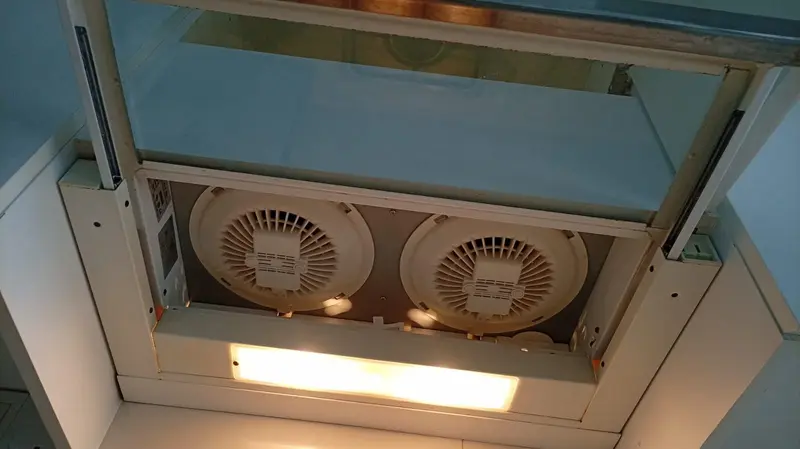
Before
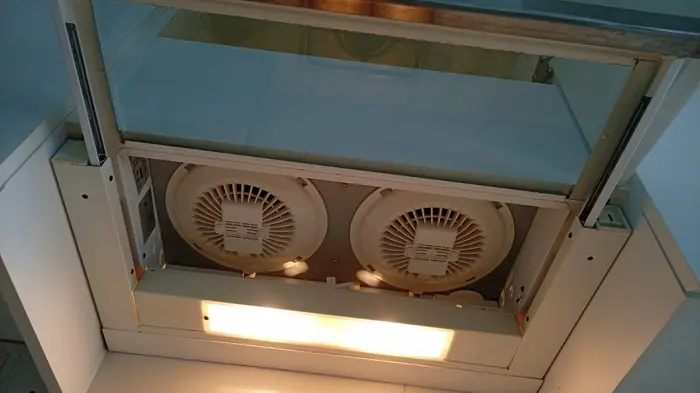
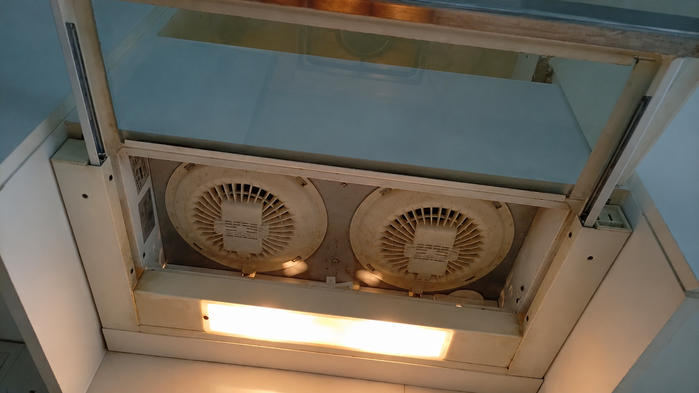
After
1. Cleaning the filter and the hood interior
This is the monthly job. It takes about twenty minutes of hands-on time plus the soak, and it is what keeps the hood extracting the way it did when it was installed.
- Switch the hood off at the wall switch or isolator, not just the power button, and let the light panel cool for a few minutes before you touch anything.
- Remove the filter and the oil cup. Most Singapore hoods have a mesh cassette that unclips or slides out, or an aluminium panel that lifts out. Check the manual once if it feels stuck rather than forcing it.
- Soak the filter in the hottest water from your tap mixed with a kitchen degreaser for 20 to 30 minutes. Baking soda with dish soap works if you do not have a degreaser. Do not use a metal brush, which scratches the mesh and gives grease a place to grip.
- Brush the mesh along the direction of the holes with an old toothbrush or a soft washing-up brush. Rinse under hot running water until it runs clear, then shake out the excess.
- Wipe the inside of the hood with a cloth soaked in degreaser and wrung out so it is damp, not dripping. Do not spray cleaner up into the fan housing: liquid tracks down the motor and into the electronics.
- Dry the filter completely before you refit it. A wet filter drips onto the hob and encourages rust along the edges of a cheap mesh panel.
- Run the fan on high for five minutes with a window open, so loosened residue clears the duct rather than settling back on the surfaces you just wiped.
If your hood recirculates: condominiums that cannot duct to the outside use a charcoal filter behind the mesh. It cannot be washed. Replace it every three to six months, sooner if the kitchen still smells of last night’s dinner after cooking.
2. Degreasing the fan plates
Do this every second or third filter wash. It is the step that restores suction, and the step most people never do because the filter hides it.
- Look up into the hood with a torch. The two circular fan plates you see are the parts that hold the most grease, and they are usually the reason a hood feels weak.
- Soak a microfibre cloth in hot water with a squirt of degreaser and wring it out well.
- Working around one fan plate at a time, wipe along the fins from the centre outwards. Support the plate with your free hand if it turns freely.
- Use a soft detail brush or an old toothbrush for the narrow gap between the fins, then wipe again with a clean damp cloth until no yellow film comes off.
- Repeat on the second plate, then wipe the surrounding metal and plastic housing, the light panel and the sliding glass panel edge.
- Finish with a clean dry cloth so no moisture sits near the motor or the wiring connectors.
If the grease on the plates has hardened to the point where a damp cloth barely touches it, do not attack it with a scouring pad. Warm the surface with a cloth soaked in hot water and degreaser held against it for a minute, then work in small circles. Baked-on grease softens with time and heat, not with pressure.
Hood too far gone for a cloth?
Send us photos of your hood and hob on WhatsApp and we will include a full kitchen degrease in your quotation, alongside the rest of the home if you need it.
Get My Free WhatsApp QuoteHow often should each part be cleaned?
Treat this as the baseline for a home that cooks most days. Wok cooking on high heat, deep-frying or a hob that runs for an hour every evening should all be cleaned at the shorter end of each interval.
| Part | How often | Why |
|---|---|---|
| Filter or mesh cassette | Monthly deep wash | A clogged mesh is the number one cause of weak suction |
| Fan plates and interior | Every 2 to 3 months | Grease on the fins adds weight and loads the motor |
| Oil cup or drip tray | Monthly | Overflow drips onto the hob and cabinets below |
| Underside, light panel and glass panel | Monthly | Wiping weekly keeps the film from baking onto plastic |
| Charcoal filter (recirculating hoods) | Every 3 to 6 months | Charcoal cannot be washed; it stops absorbing odours once saturated |
| Duct or false ceiling vent | Yearly, by a professional | Baked-on grease in a duct is a serious fire risk |
Mistakes that damage a hood
A hood is mostly plastic, aluminium and a small motor, and it does not tolerate much. These are the mistakes that turn a cleaning job into a repair:
- Spraying water or cleaner up into the fan housing. Liquid travels straight down the shaft and into the motor.
- Using bleach on aluminium mesh or the fan plates. Aluminium reacts and turns dark grey or black, and the finish never comes back.
- Scrubbing glass or stainless steel with a green scouring pad. The scratches hold grease and are permanent.
- Running the hood with the filter removed for weeks. Grease then goes straight into the fan and the duct instead of collecting where you can reach it.
- Using a steam cleaner around the light panel or the controls. Steam drives moisture into the wiring.
- Mixing a degreaser with bleach or an acidic descaler in the same session. Rinse and dry in between if you must use more than one product.
The hood in a Singapore rental or handover
Kitchen degreasing is one of the most common reasons a landlord deducts from a security deposit, and the hood is usually the reason the kitchen fails inspection. A hood that looks fine from the front can hide a filter that has not been washed in two years, and an agent viewing the unit with the light on will see the yellow plates the moment they look up.
For tenants, cleaning the hood before the final move-out clean is worth the twenty minutes. For landlords and agents, a hood degrease belongs in the handover cleaning checklist along with the oven, hob and cabinet exteriors, because they fail together and read as one problem.
In a home that has just been renovated, hood grease is the least of it: fine renovation dust settles into the hood, the cabinet tops and every open shelf, which is why post-renovation cleaning is done top to bottom and the hood is opened up rather than wiped.
When to call a professional
A hood that has been washed monthly is a DIY job. Call in help when any of these is true: the grease on the fan plates has set hard enough that a cloth will not shift it, the hood has not been cleaned in more than two years, oil drips from the underside, the motor sounds laboured or the unit smells of stale cooking even when it is off, or the duct and false ceiling vent have never been inspected.
Kitchen degreasing on that scale needs commercial degreasers, a proper strip-down and the time to let the product work, which is exactly what is included in our deep cleaning services for Singapore homes. You can view our cleaning prices or browse recent cleaning projects to see the standard we work to, and a deep clean rather than a regular clean is the right starting point if the kitchen has been neglected.
Frequently Asked Questions
How often should I clean my kitchen hood in Singapore?
Wash the filter monthly, and deep clean the fan plates and interior every two to three months. Homes that cook with a wok on high heat daily, or that deep-fry often, need the filter washed every two to three weeks because the grease builds far faster. Hoods above a hob that only gets light use can stretch the interior clean to every four months.
Can I put my hood filter in the dishwasher?
Only if the manufacturer says it is dishwasher safe, which is common for stainless steel mesh but not for aluminium panels or filters with plastic frames. A dishwasher will not clear a heavily clogged mesh on its own, so rinse the worst of the grease off with hot water first, then put it in on a hot cycle and let it dry fully before refitting.
Why has the suction on my hood become so weak?
Weak suction almost always comes from a clogged filter, a layer of grease on the fan plates, or a duct that is partly blocked with baked-on residue. Clean the filter first, then the fan plates. If the airflow is still poor after both, the blockage is inside the duct or the fan is worn, and the hood needs professional attention.
What is the difference between a ducted and a recirculating hood?
A ducted hood pushes air out through a duct in the wall or false ceiling, so it needs its filter and duct kept clear. A recirculating hood pulls air through a charcoal filter and blows it back into the kitchen, which is common in condominiums where ducting to the outside is not allowed. The charcoal filter cannot be washed and should be replaced every three to six months.
Could a greasy hood be a fire risk?
Yes. Grease that collects on the fan plates and inside the duct is fuel. If a flame from the hob reaches it, or the motor runs hot from the extra load, that residue can ignite. A hood that has never been deep cleaned is one of the most overlooked fire risks in a kitchen, ahead of most things homeowners actually worry about.
Do professional cleaners degrease kitchen hoods in Singapore?
Yes. Kitchen degreasing, including the hood, hob, backsplash and cabinet exteriors, is part of our deep cleaning, move-out and handover packages. A hood that has gone a few years without attention usually needs stronger degreasers and a full strip-down that is not practical with household products. Send us photos of the hood and we will include it in your WhatsApp quotation.
Want the kitchen done properly?
Send us a few photos on WhatsApp and we will reply with a transparent, all-inclusive quotation, usually within minutes.
Get My Free WhatsApp Quote View our Singapore cleaning services